
Aaram Kursi Buying Guide: How to Pick the Right Wooden Rocking Chair for Your Home
Somewhere around the fourth tab of Google results, "aaram kursi" stops feeling like a simple purchase. Cane or wood. Cushioned or plain. With ottoman or without. One listing at ₹6,000, another at ₹25,000, both claiming to be the best one you'll ever sit in. There's no shortage of chairs, just a shortage of anyone actually explaining what separates a good one from a chair you'll regret in eight months.
We've been building wooden furniture since 2016, and rocking chairs are probably the single item customers grill us about the most before checkout - more than sofas, more than beds. Fair enough, it's the kind of chair people expect to keep for a decade or longer, so a wrong pick actually stings. What follows is everything we'd tell a friend who walked into our workshop asking the same questions: what an aaram kursi even is, which type suits which home, what to inspect before paying, and what people who've actually lived with one for a year have to say about it.
So What Is an Aaram Kursi, Exactly?
Aaram kursi means "comfort chair" in Hindi, and unlike a lot of furniture names, this one isn't marketing — it's literal. The defining feature is a curved base, called a rocker, that lets the chair sway gently instead of staying planted like a normal seat. Most of us grew up with one somewhere in the house: a grandparent's corner spot, a veranda chair that creaked in just the right way, something near a window that caught the evening light.
Older households leaned toward cane. It breathes well, it's light enough to move around, and it suited a hot climate before ceiling fans and AC were everywhere. Wood has largely taken over now, mostly because sheesham holds up to daily use in a way woven cane just doesn't — no sagging, no fraying, no annual repair trip to the local craftsman.
Why Bother With a Rocking Chair at All
It's not purely sentimental. The rocking motion itself does something — it's mildly rhythmic, almost meditative, and a fair number of people use theirs specifically to unwind after a long day or to ease stiffness from sitting at a desk for hours. Parents rock babies in these for a reason; the motion works on adults too, just less obviously. We covered the fuller list of physical and everyday benefits separately in 11 Benefits of a Rocking Chair, so I won't repeat all of it here. Short version: it's a chair people actually use, daily, for years — not something that becomes a coat rack within a month.
The Different Kinds You'll Run Into
Not every "kursi chair" listing online is describing the same product, which is half the reason people get confused shopping for one.
Cane versions are still around and still the lightest option, good if you want something breezy for a warm room. They just don't age as gracefully — the weave loosens over the years, and depending on where you live, finding someone to re-weave it isn't always easy.
Plain wooden rockers skip the footrest and keep things simple: a solid frame, usually sheesham or mango wood, built around a rocking base. Sturdier than cane, no question, and a sensible pick if floor space is tight.
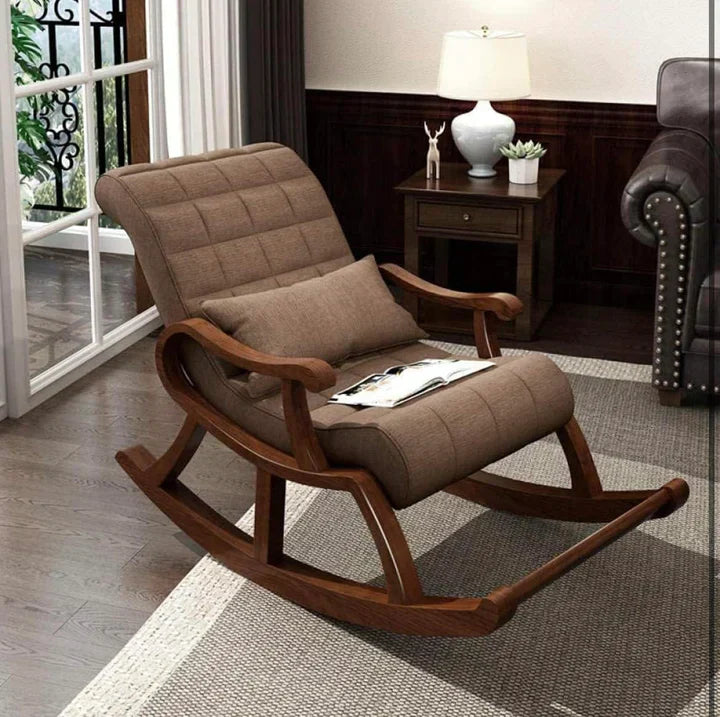
Then there's the version most people end up buying once they've actually sat in one — a wooden aaram kursi with a matching ottoman. The footrest changes the whole feel of the chair. Sitting becomes lounging. Most of our cushioned, high-back models, like this sheesham wood rocking chair with ottoman, fall into this category, and it's consistently our best-selling style for exactly that reason.
A newer category worth mentioning: upholstered rockers on a wooden or metal base, velvet seat, styled more like a statement armchair than anything you'd associate with a veranda. Good middle ground if you want the rocking motion without the "traditional" look.
If none of that narrows it down enough, our rocking chairs collection has the current lineup, and seeing them side by side usually helps more than reading about them does.
What Actually Matters Before You Pay
The wood. Sheesham — Indian rosewood — is what you want for anything getting daily use. It's dense, resists warping, and the grain only gets better looking with age. Mango wood is cheaper and fine for occasional use, but it's softer and shows wear sooner than most buyers expect. If a listing is vague about the wood type, treat that as a warning sign rather than an oversight.
Handmade vs factory-made. This shows up in the joinery, the grain matching, and honestly, how long the thing survives years of rocking. Two chairs can look nearly identical in photos and be built completely differently underneath. We broke this down properly in Handmade vs Machine-Made Solid Wood Furniture: 11 Differences We Never Notice — worth five minutes if you're comparing two similarly priced options.
The rocker itself. A smooth, even rock is the whole reason you're paying more than a regular chair costs. Check reviews for mentions of wobble or uneven rocking — it's a fixable issue, usually, but you'd rather know upfront. We wrote a separate guide on exactly this: How to Stabilize a Rocking Chair and What to Know Before Buying One.
Size and weight capacity. Most standard models handle 100-120kg without issue, but check the specific listing rather than assuming. Taller buyers should also glance at seat depth and armrest height — overall chair height alone doesn't tell you much.
Upholstery. Removable, washable cushion covers are worth the small extra cost, especially near a window or in a room the whole family uses. Velvet looks rich but shows dust noticeably faster than a cotton blend.
Delivery and replacement terms. Rocking chairs usually arrive pre-assembled or close to it, since the rocker needs precise alignment done at the factory, not guessed at on your living room floor. Check the replacement window too — furniture is heavy, and transit damage happens even with careful shipping.
What People Say After Actually Living With One
We went through the reviews on our own listings, including Amazon, mostly looking for what people said after the honeymoon period — weeks or months in, not day one.
The pattern holds up pretty well. People keep describing the rock as soothing, several mention it becoming their go-to reading spot, and more than one buyer said it turned into the most-used chair in the house within days. One review called it "a pride of the house" months after delivery — which is a better compliment than five stars, honestly, because nobody says that about furniture they've stopped noticing. Build quality and comfort come up again and again as the reasons people are glad they bought one.
Not every review is glowing, and it'd be dishonest to pretend otherwise. A handful of buyers thought delivery charges ran high relative to the chair's price. A few others got a unit where the rocking base wasn't quite level out of the box — annoying, but fixable, and it's the exact problem our stabilizing guide above walks through. If you're shopping anywhere, not just with us, reading the three-star reviews is usually more useful than the five-star ones. They tell you what actually goes wrong.
What an Aaram Kursi Actually Costs
Roughly, here's where the market sits:
-
Basic cane rocking chairs: ₹3,000–6,000
-
Wooden rocker without ottoman: ₹8,000–13,000
-
Sheesham wood aaram kursi, cushioned, with ottoman: ₹12,000–18,000
-
Premium upholstered or designer wooden rockers: ₹18,000 upward
Festive sales and first-order discounts can shave a meaningful chunk off these, so if you're not in a rush, it's worth waiting a couple of weeks rather than buying at full price the day you start looking. One rule of thumb that rarely fails: if a chair is priced well under the sheesham range above but claims to be sheesham wood, it probably isn't. Check the material line in the listing, not just the price tag.
Where It Should Actually Go in Your Home
Placement gets ignored more than it should, and it changes how often the chair actually gets used. A spot near a window works well — natural light makes reading or an afternoon doze far more pleasant — though it's worth keeping the chair a foot or so back from the glass so the wood isn't baking in direct heat all day. In a living room, angling it slightly toward the main seating area instead of facing a blank wall keeps it part of the conversation rather than stranded in a corner. On a balcony or veranda, leave real clearance behind the chair; people measure the width and forget the rocker needs another 20-25cm of open space behind it to move freely. For a nursery or a tight bedroom corner, skip the ottoman version — the smaller footprint of a rocker without a footrest is usually the more practical call when floor space is limited.
Looking After It
Solid wood asks for very little, provided you don't ignore it completely. Keep it out of constant direct sun — long-term UV exposure dries out and fades wood faster than most people expect. A dry or barely-damp cloth handles regular dusting; skip harsh chemical cleaners on the frame, and use a wood-safe polish every couple of months to keep the grain looking alive. If the cushions come off, wash the covers separately and let them dry fully before putting them back — especially during monsoon, when trapped damp turns into a musty smell fast.
Why Ours Are Built the Way They Are
Every rocking chair leaving our workshop is solid sheesham wood — not particleboard wearing a wood-print laminate. That's really the whole difference, and it's why customers still send us photos of their chairs two or three years later, usually pointing out how the grain's gotten richer with age rather than complaining about anything falling apart. We're a family business, and each chair gets built the way we'd want one for our own house: proper joinery, a rocking base checked before it ships, and cushioning meant to hold up after the hundredth sit, not just the first one.
The rocking chairs collection has our current range if you want to see the ottoman and non-ottoman versions across the available colourways.
Quick Questions People Ask Us
Is a wooden aaram kursi actually good for back pain? For general stiffness from long sitting, the rocking motion genuinely helps, and a high-back cushioned design gives more lumbar support than a flat traditional frame. If you have a diagnosed spine condition, though, check seat firmness with a doctor first rather than assuming any rocker will help.
What should I expect to pay for a decent one? For solid sheesham with cushioning and an ottoman, budget somewhere between ₹12,000 and ₹18,000. Below that range, ask specifically about the wood.
Can these go outdoors? Some can, but check the individual listing rather than assuming. Most indoor finishes aren't built for constant sun and rain, so a covered porch is fine — fully open, unsheltered outdoor use usually isn't.
Mine wobbles. Now what? Nine times out of ten it's an uneven rocking base or a floor that isn't quite level. Our guide on stabilizing a rocking chair walks through the fix step by step.
Sheesham or mango wood — does it really matter? For a chair you'll use daily for years, yes. Sheesham is denser and handles warping far better. Mango wood is lighter on the wallet and reasonable for occasional use, just don't expect the same lifespan.
An aaram kursi isn't really about finding the best-looking one in your search results. It's about picking the one still holding up — and still your favourite seat in the house — five years from now. Check the wood, check the rocker, actually read the mixed reviews, and you'll end up with a chair worth keeping around a lot longer than you originally planned.
How Much Taller Can an Ottoman Be Than a Couch? A Practical Size Guide for Indian Homes
21 Best Wooden Furniture Ideas to Decorate Your Home for Diwali 2026
Related Posts

Where to Keep Bed as per Vastu: Best Position, Head Direction and Easy Fixes

21 Best Furniture Websites to Buy Furniture From in India (2026 Edition)

21 Best Wooden Furniture Ideas to Decorate Your Home for Diwali 2026

How Much Taller Can an Ottoman Be Than a Couch? A Practical Size Guide for Indian Homes

How to Arrange a 3 Seater Sofa in a Small Living Room: 21 Space-Smart Layout Ideas for 2026

Handmade vs Machine-Made Solid Wood Furniture: 11 Differences We Never Notice